Cart
0
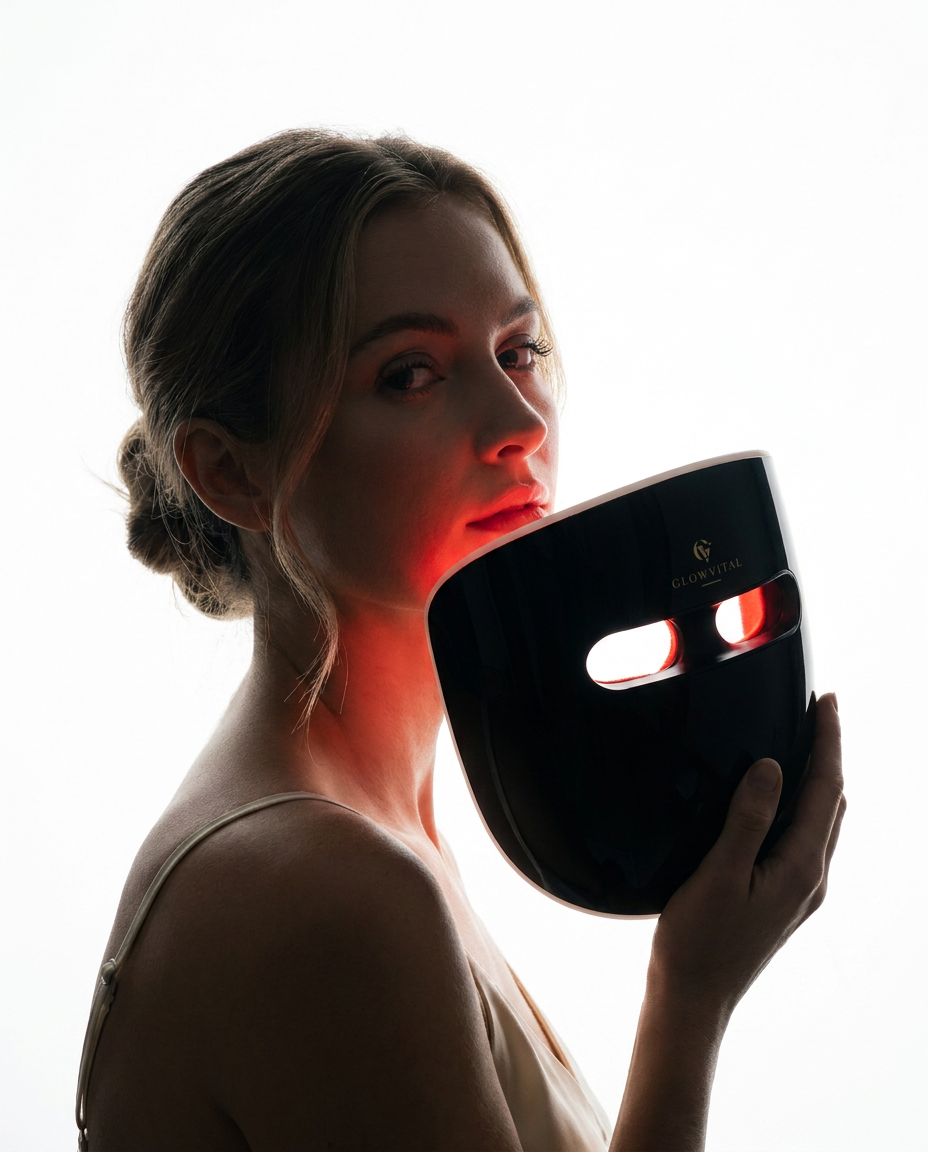
So you have narrowed it down to the Shark CryoGlow, and who could blame you. It is well built, well reviewed and carries a name you already trust from the hoover in your cupboard. The bit that gives you pause is the price. Is it really worth spending £299.99 on the Shark, or would the £199.99 GlowVital OmniGlow do the same job for your skin? This guide walks you through it plainly: how the tech works, what actually matters when you put two masks side by side, where each one genuinely wins, and what each costs you per session over a year.
Choose the CryoGlow if…
Built in under-eye cooling is your number one priority, you value Shark's brand network, and £300 sits comfortably in your budget.
Choose the OmniGlow if…
You want all three clinically recognised wavelengths in a fully wireless mask, a 60-day money-back guarantee to prove it on your own skin, and £100 left in your pocket.
First, how any LED mask works
Before comparing two specific devices, it helps to understand what you are actually buying. LED light therapy uses narrow bands of visible and near-infrared light, delivered at safe, non UV wavelengths, to support how skin looks and behaves over time.
- Red light, around 620 to 640nm, is the most studied band. It is associated with supporting collagen and the look of smoother, firmer skin.
- Blue light, around 465 to 475nm, targets blemish causing bacteria on the skin's surface, which is why it is the band linked with clearer looking skin.
- Near-infrared, around 820 to 850nm, sits just beyond visible light and penetrates deepest, which is why premium devices include it for overall skin support.
Two practical truths follow from the science. First, the wavelengths matter more than the badge on the box: a 630nm red LED behaves the same way whichever brand ships it. Second, consistency beats intensity. Ten minutes, three to five times a week, sustained over weeks, is what the visible timeline depends on. Any mask you will not use consistently is the wrong mask, whatever it costs.
The five things to compare on any two LED masks
Strip away the marketing and a fair comparison comes down to five questions. We use the same five for every device, including our own.
- Which wavelengths are included? Red alone is common. Red plus blue plus near-infrared covers texture, blemishes and deeper support in one device.
- How many LEDs, and how is the face covered? More diodes in a flexible shell means more even coverage. OmniGlow carries 120 medical grade LEDs in a soft silicone shell.
- Will you actually wear it? Wireless, lightweight and comfortable wins over technically impressive but tethered. The mask that fits your sofa habit is the mask that gets used.
- What protects your money? A genuine money back window and a real warranty matter more than any claim, because they let you test the product on the only skin that matters: yours.
- What does it cost per session? The honest way to compare a £199.99 mask, a £300 mask and a clinic course. We do this maths below.

The category's open secret: the core technology is shared. The price gap is mostly brand.
OmniGlow vs Shark CryoGlow: the full specification table
| GlowVital OmniGlow | Shark CryoGlow | |
|---|---|---|
| UK price at time of writing | £199.99 | £299.99, stand sold separately at £49.99 |
| Red light | ✓ 620 to 640nm | ✓ |
| Blue light | ✓ 465 to 475nm | ✓ |
| Near-infrared | ✓ 820 to 850nm | ✓ infrared |
| LED count | 120 medical grade | Not always published, check current listing |
| Power source | Battery in the mask | Battery in the remote |
| Cable between mask and controller | None | Yes, a lead of about 35 inches (90cm) |
| Under-eye cooling | Pair with Lumeris hydrogel patches | ✓ built in InstaChill |
| Session length | 10 minutes | Preset programmes, varies by mode |
| Money back window | 60 days | See Shark's current returns policy |
| Warranty | 2-Year Warranty | See Shark's current policy |
Design and comfort: will you wear it on a Tuesday night?

The test that matters: a mask you can forget you are wearing while life carries on.
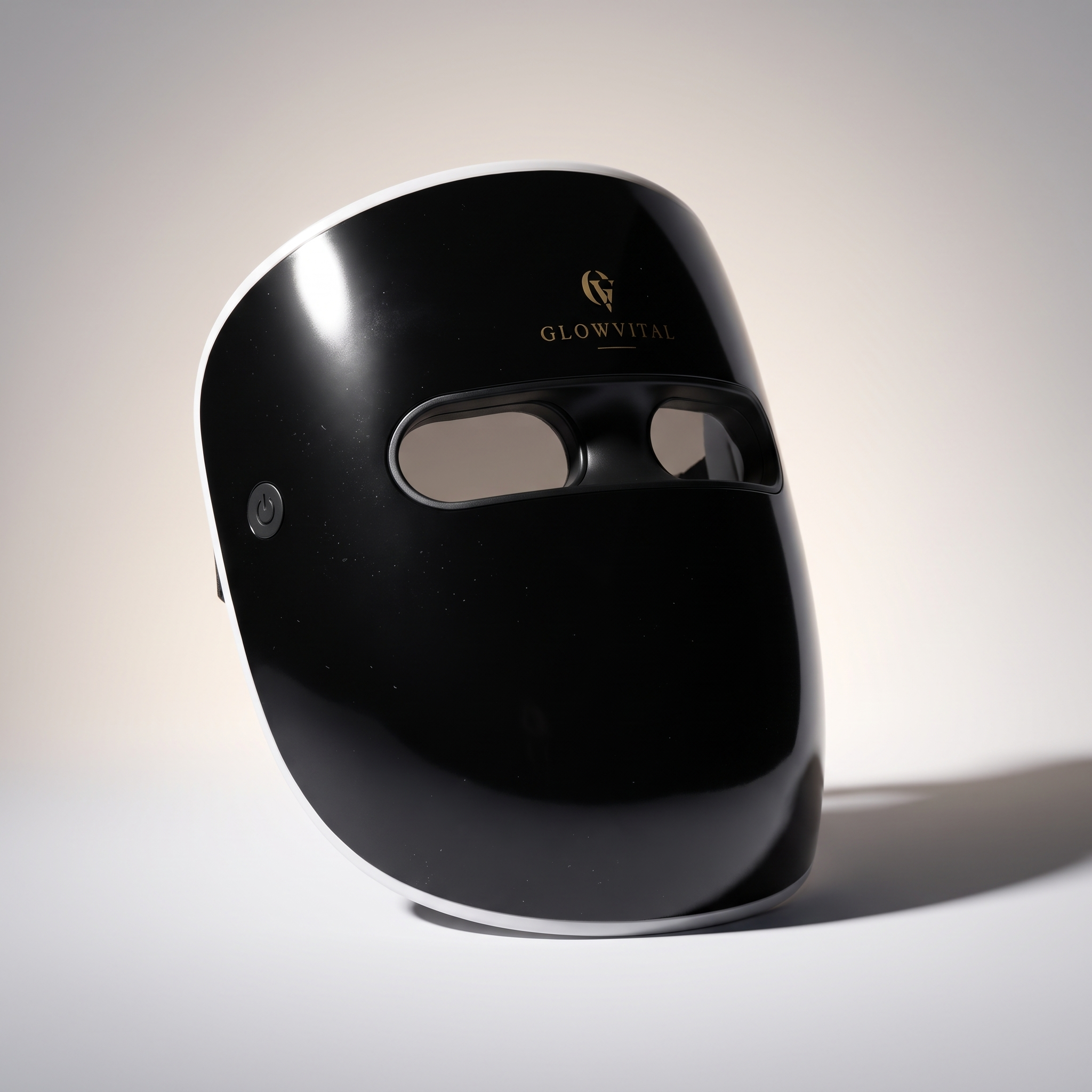
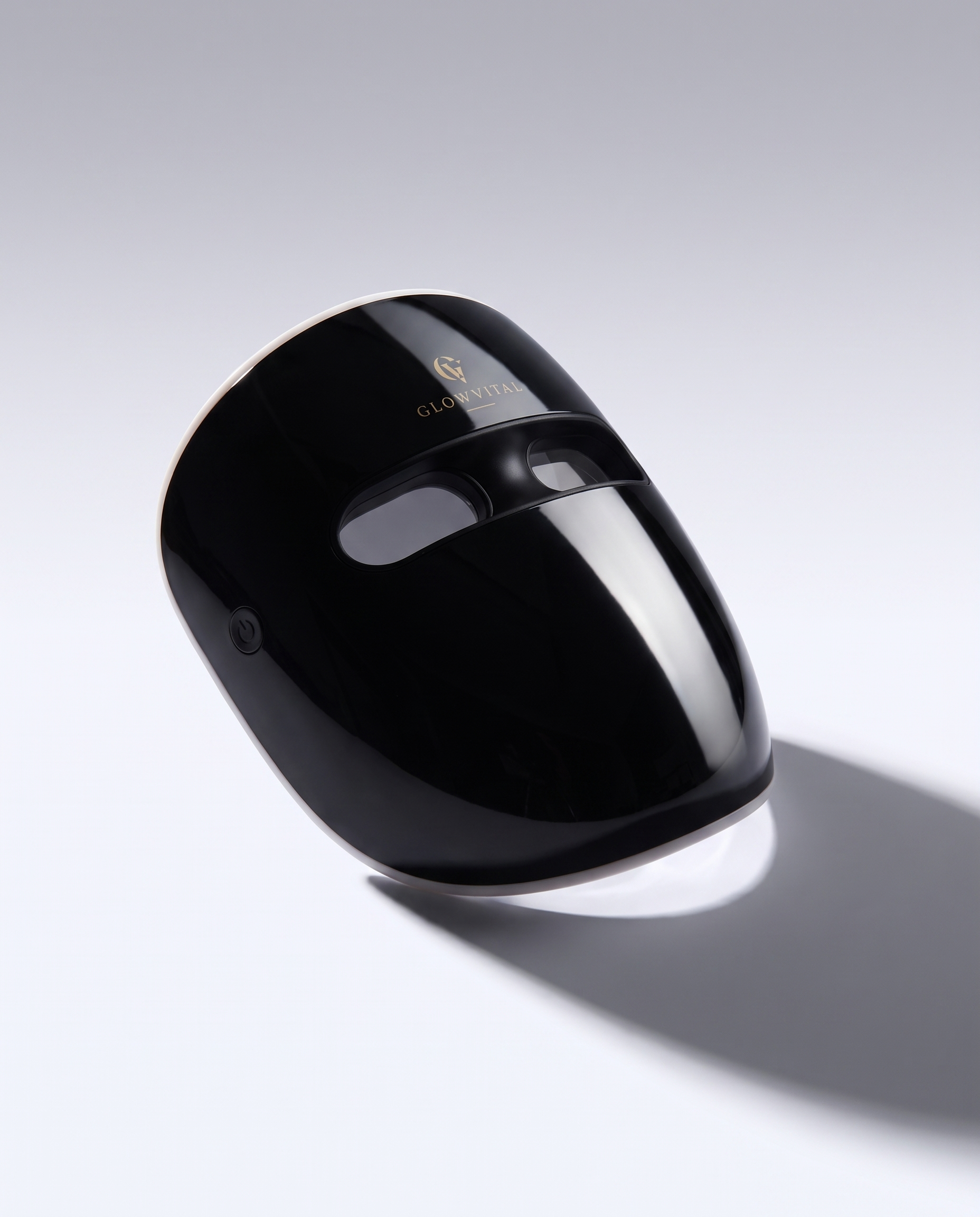
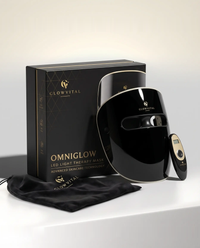
Both masks run on batteries rather than a wall socket, which already puts them ahead of the mains powered devices still sold in this category. What that means in practice differs. The OmniGlow keeps its battery and electronics in the mask and its remote is not attached to it, so nothing is connected to you. The CryoGlow holds its battery in the remote, which is joined to the mask by a lead of roughly 90cm and clips to your clothing during a session. The OmniGlow uses a flexible medical grade silicone shell that follows the contours of the face, with soft straps and a separate wireless remote, so you can read, scroll or finish your tea mid session. The CryoGlow takes a more rigid, visor style approach with an onboard control. Neither is uncomfortable. The practical difference is weight and habit: a soft shell disappears on the face in a way rigid visors tend not to, and the device you forget you are wearing is the one you will still be using in week seven.
The light modes, compared properly

Three wavelengths, three jobs: red for the look of firmness, blue for the look of clarity, near-infrared for depth.
Both devices cover the three bands that matter. The CryoGlow runs them through preset programmes; the OmniGlow gives you direct control over each mode from the wireless remote, in 10 minute sessions, three to five evenings a week. In our published review base of 751 verified reviews, blue light users report noticeably clearer looking skin from around week 5, and 84% of surveyed customers reported visibly smoother looking skin by week 7 of consistent red light use. Skin is individual, which is exactly why the money back window matters in this comparison.
The under-eye cooling question
Time to give Shark full credit. The CryoGlow's InstaChill under-eye cooling is a genuinely distinct feature, and no other major mask has it built in. If integrated cooling is the single feature you care about most, the CryoGlow is the honest recommendation and you can stop reading here.
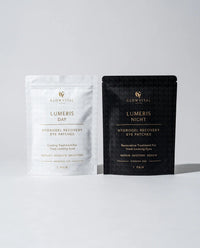
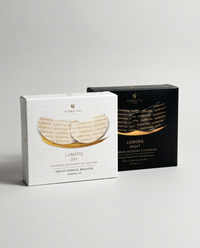
Our answer to the same problem is deliberately different. Cooling the under-eye is a hydration and temperature job, so we treat it with a dedicated product rather than a heavier mask: Lumeris hydrogel recovery eye patches cool, hydrate and visibly depuff the look of tired eyes in 15 minutes, and they layer under the OmniGlow during a session. Mask plus patches still comes in below the CryoGlow's price.
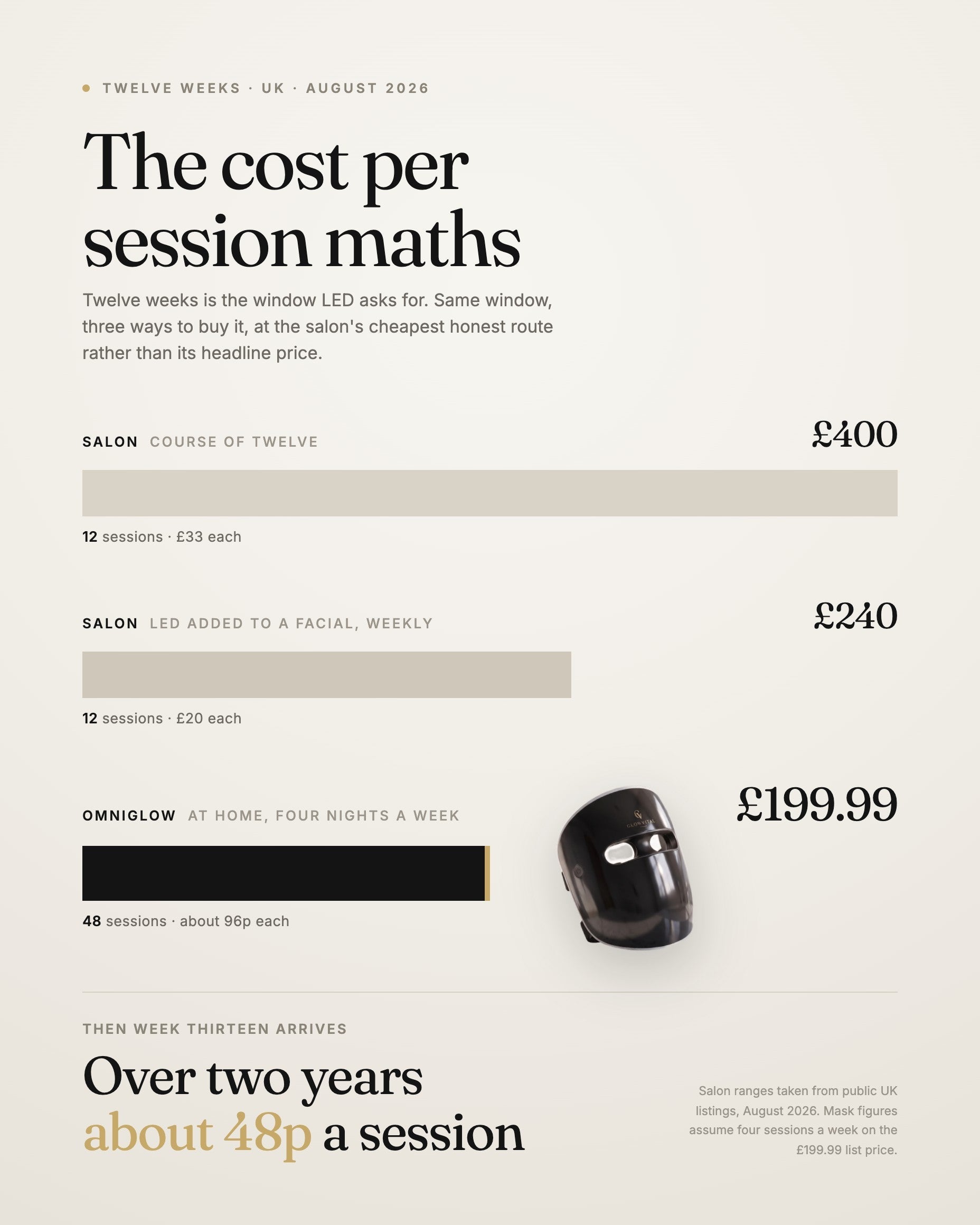
The cost per session maths
This is the comparison the price tags hide. Assume four sessions a week, which is 208 sessions in year one.
| Option | Upfront | Cost per session, year one |
|---|---|---|
| GlowVital OmniGlow | £199.99 | About 96p |
| Shark CryoGlow | £299.99 | About £1.44 |
| Clinic LED course | £60 to £120 per session | £60 to £120 |
Every at home mask embarrasses the clinic on price, which is why the category exists. Between the two masks, the CryoGlow costs about 1.5 times more per session for the same three light bands. What you are buying with the difference is the cooling feature and the Shark badge. Whether that is worth £100 is a personal call, and now it is an informed one.
Warranty, returns and what is in the box

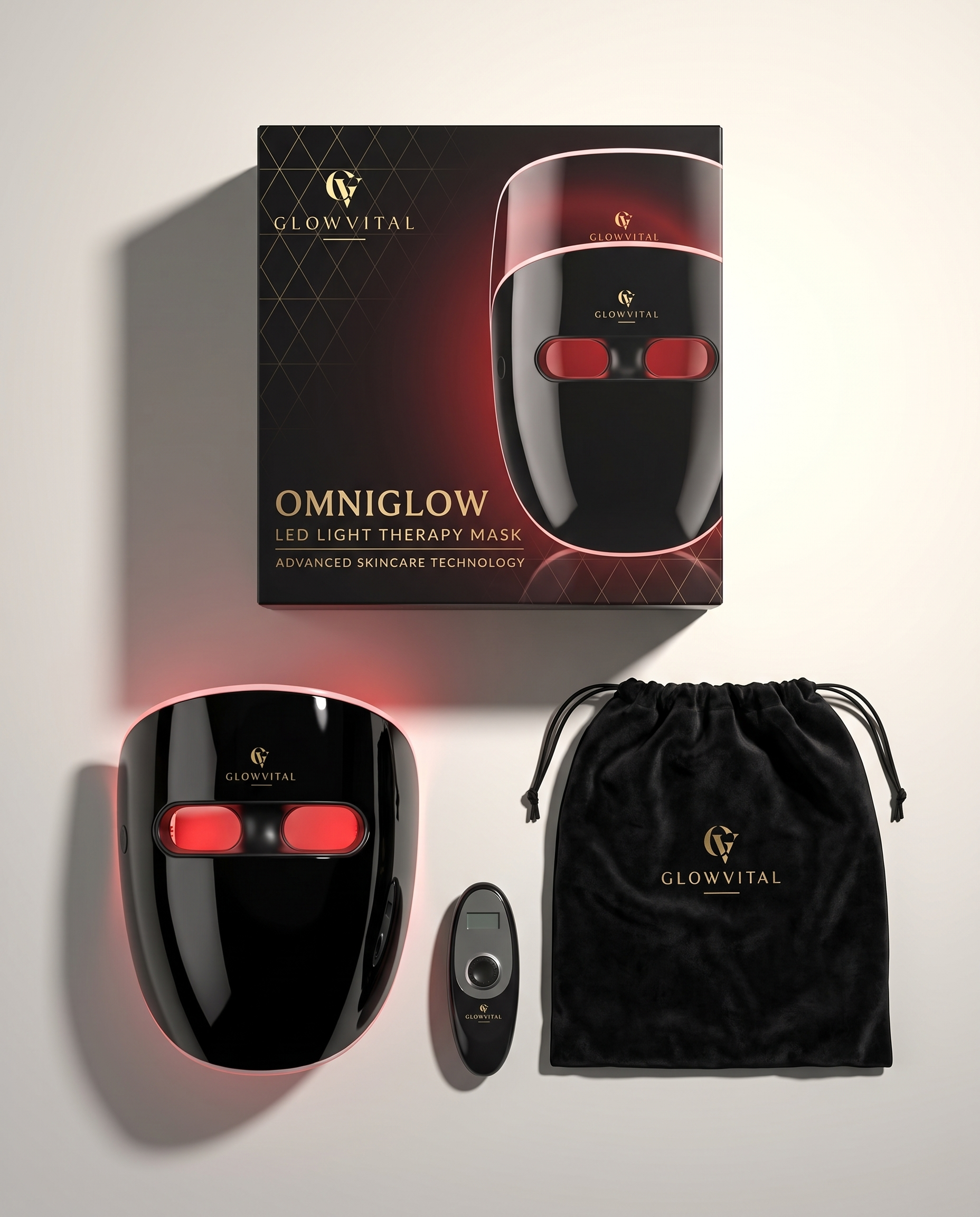
In the OmniGlow box: the silicone mask, wireless remote, USB Type C cable, eye protection and instructions.
OmniGlow ships with a 60-day money-back guarantee and a 2-Year Warranty, with UK support and Royal Mail Tracked delivery, free on orders over £29.99. Shark's returns and warranty terms are solid for the category, and you should check their current policy when you compare. The structural difference is the money back window: a guarantee that lets you run the full early timeline on your own skin, then decide, removes most of the risk from this purchase.
How we compared. Prices were checked in June 2026 from public UK listings, including the brands' own sites and major UK retailers. Hardware details, including the CryoGlow's remote lead, were checked in August 2026 against Shark's own published materials and independent long term reviews. We sell the OmniGlow, so read our verdicts knowing that, and check Shark's current listing before you decide. We have kept every CryoGlow advantage in this article because a comparison you cannot trust is worth nothing.
The bottom line
Our verdict
The CryoGlow is the right buy if built in under-eye cooling decides it for you. For everyone else, the OmniGlow delivers the same three wavelengths, 120 medical grade LEDs and a lighter, untethered fit with no controller cable, for around £100 less, with 60 days to prove it on your own skin.
Shop OmniGlow · £199.992-Year Warranty · 60-day money-back guarantee · Free UK delivery over £29.99 · Klarna pay in 3 · Clearpay pay in 4
Frequently asked questions
Is the OmniGlow really comparable on technology?
Yes. Both masks deliver red, blue and infrared light through LEDs in a wireless full face design. OmniGlow runs 120 medical grade LEDs across three switchable modes at 620 to 640nm, 465 to 475nm and 820 to 850nm. The CryoGlow's distinct extra is its built in under-eye cooling.
Which mask is better for blemish prone skin?
Both include blue light, the band that targets blemish causing bacteria. OmniGlow's blue mode runs at 465 to 475nm as one of its three standard modes, switchable from the wireless remote.
How long until I see a difference with either mask?
LED results build with consistency. As a guide from our review base, clearer looking skin is typically reported from week 5 of blue light use and visibly smoother looking skin by week 7 of consistent red light use, at three to five sessions a week.
Are LED masks safe to use at home?
LED therapy is non invasive and uses no UV light. If you have a diagnosed skin condition, are pregnant, or take photosensitising medication, check with your GP before starting.
What does the OmniGlow guarantee cover?
A 60-day money-back guarantee from delivery, plus a 2-Year Warranty on the device. Delivery is free in the UK on orders over £29.99.
Does the Shark CryoGlow have a cable?
Yes. The CryoGlow is not mains powered, but its remote holds the rechargeable battery and is joined to the mask by a lead of roughly 35 inches, about 90cm, with a belt clip so you can attach it to your clothing. The OmniGlow keeps its battery and electronics in the mask and its remote is untethered, so nothing is attached to you during a session.
Are these prices current?
Prices were checked in June 2026 from public UK listings. Always confirm current pricing and specifications on each brand's own site.