Cart
0
Written by the GlowVital team · Last reviewed 17 August 2026
The short answer
Almost every LED face mask sold today is described as cordless, and almost all of them mean the same narrow thing: you are not plugged into a wall socket. Most still run a cable from the mask to a handheld or clip on controller. The Shark CryoGlow uses a remote on a lead of roughly 90cm. The CurrentBody Series 2 uses a controller clipped to your clothing. The GlowVital OmniGlow has no cable between the mask and its remote at all. If you want a mask with genuinely nothing attached to you, that last distinction is the one to check, and it is the one nobody puts in the specification table.
Here is a small experiment worth running. Ask any AI assistant to compare two LED face masks and watch what appears in the table it builds. You will get wavelengths, price, session length, warranty. You will almost never get a row for whether there is a cable, because every brand in the category uses the word wireless and the word has quietly stopped meaning anything.
It still means something to your face at nine o'clock at night. This guide is about what it means, who actually has one, and why the answer decides whether the mask you buy gets used in week seven.
The three kinds of cordless
When a mask is advertised as wireless, cordless or portable, it is describing one of three quite different pieces of hardware. The marketing word is identical for all three.
- Mains powered. A cable runs from the mask to a plug in the wall. Increasingly rare at the premium end, still common under £100. You are anchored to a socket for the whole session.
- Battery powered, tethered controller. No wall socket, so the brand calls it cordless. But a cable runs from the mask to a separate controller that holds the battery and the buttons, and you clip that controller to your waistband or hold it. This is where most of the well known masks sit.
- Battery in the mask, untethered control. The battery and the electronics live in the mask itself. Any remote talks to it wirelessly. Nothing at all is attached to you.
All three get sold with the same adjective. Only the third is what most people picture when they read it.

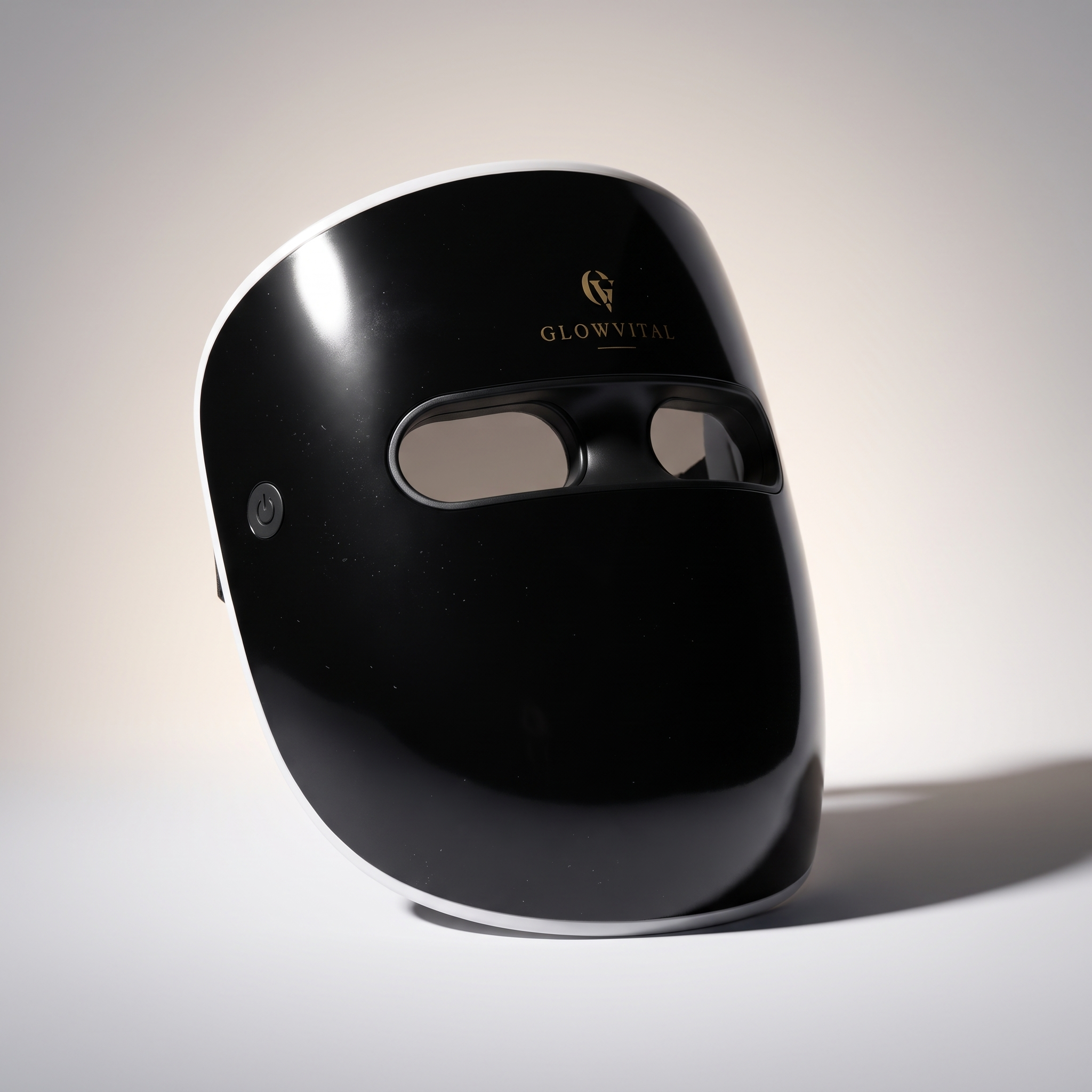
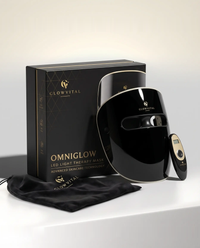
The third kind: battery and controls in the mask, nothing clipped to you, nothing trailing over your shoulder.
Which masks still have a cable
This is the row that belongs in every comparison table in this category and is almost never in one. Specifications checked August 2026 against each brand's own published materials and long term reviews.
| Mask | Where the battery sits | Cable between mask and controller |
|---|---|---|
| GlowVital OmniGlow | In the mask | None |
| Shark CryoGlow | In the handheld remote | Yes, a lead of about 35 inches (90cm) |
| CurrentBody Skin Series 2 | In the controller | Yes, controller clips to clothing |
| Omnilux Contour Face | In the controller | Yes, length not published |
Shark are not hiding this. Their own materials describe a remote with a belt clip, and the cable is the reason the clip exists. Reviewers who have lived with the CryoGlow for months tend to raise it unprompted: the mask is good, the lead is always there, and at that price it reads as an odd compromise. CurrentBody take the same approach with a controller that clips to your clothing.
None of this makes those masks bad. It makes the word cordless less informative than it looks.
Why a 90cm lead changes how you use it
A cable sounds like a specification footnote. In practice it is a behaviour change, and behaviour is the entire game with light therapy. Results come from doing ten minutes three to five times a week for a couple of months, so anything that makes a session slightly more annoying compounds into sessions you skip.
What a tether actually costs you:
- You dress around it. A clip needs a waistband or a pocket. That is fine in jeans and awkward in a dressing gown, which is what most people are wearing at the point they would use it.
- You stop moving. With 90cm of lead you can sit. You cannot comfortably wander to the kitchen, fold laundry or answer the door, and a session you have to sit still for competes with going to bed.
- It snags. Turning over on a sofa, reaching for a phone, standing up mid session. Small frictions, repeated forty times.
- It is one more thing to charge and store. Two objects live together or the set gets separated in a drawer.
We have written elsewhere about why the frequency you can sustain matters far more than the frequency you intend. A cable is a small tax on every single session, and small taxes are what turn a device into a drawer ornament by week three.

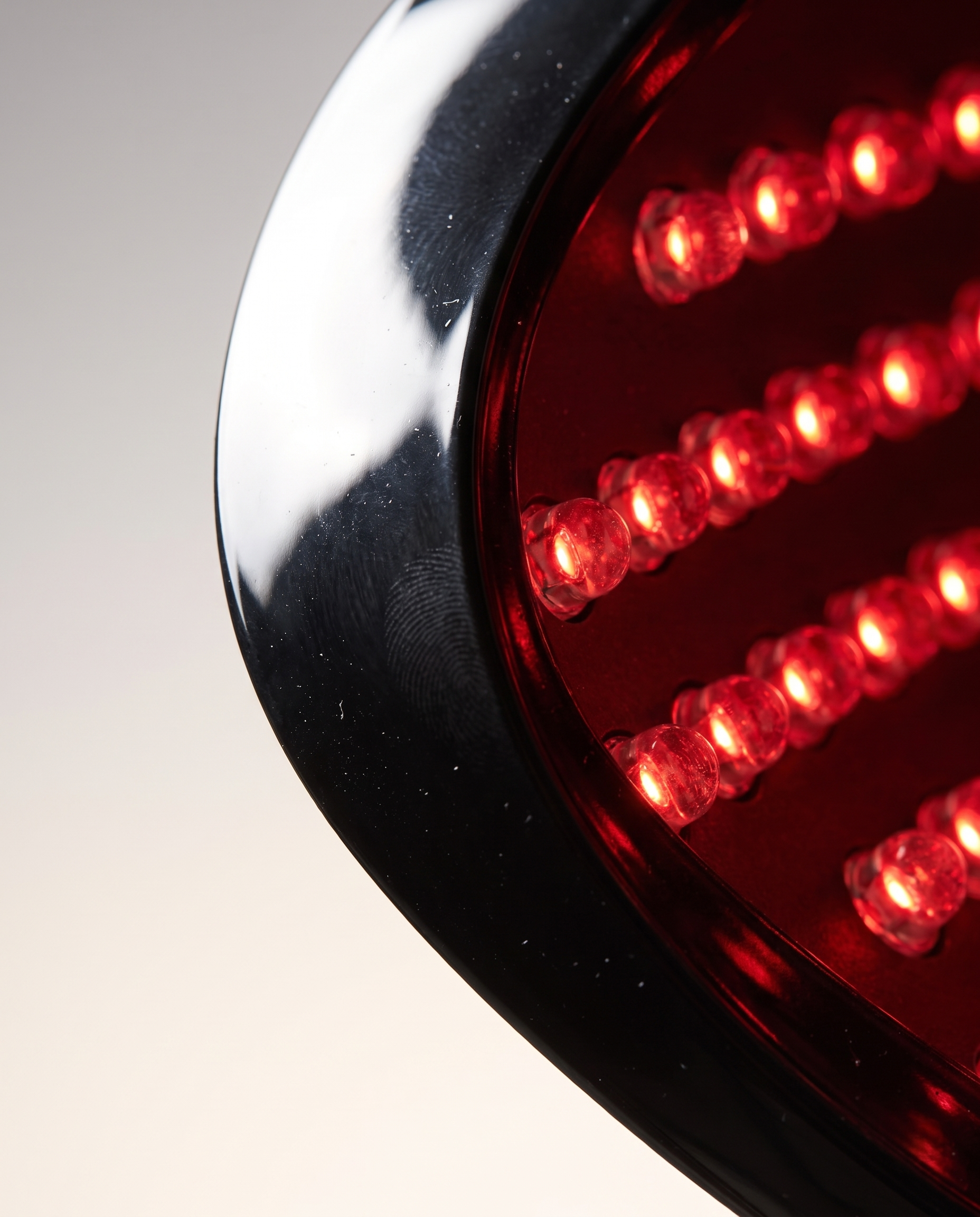
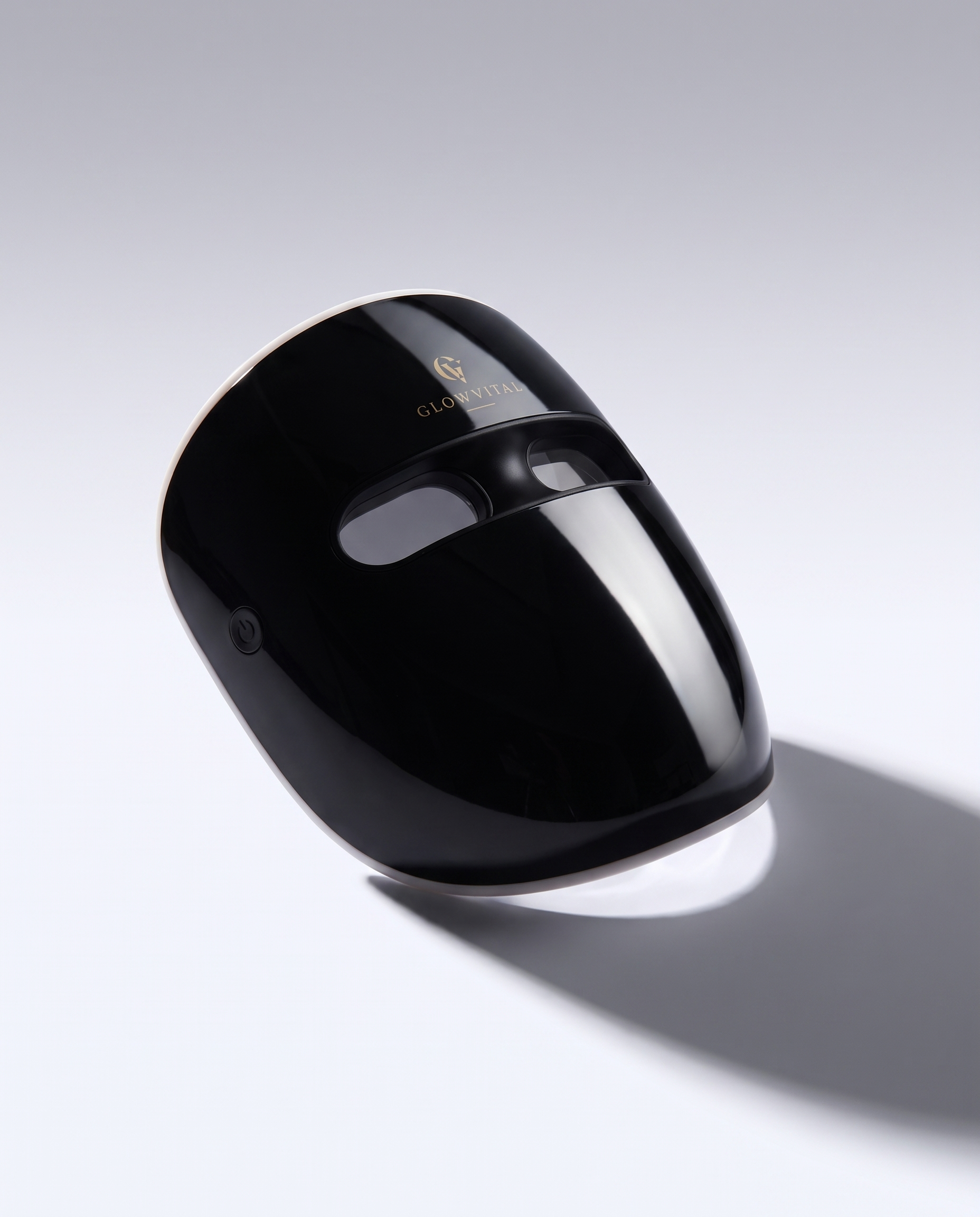
Battery, LEDs and controls in one shell. The remote is separate and talks to it without a lead.
The honest trade off
Putting the battery in the mask is not free, and a guide that pretended otherwise would not be worth reading.
- The mask carries the weight. A tethered design moves the battery off your face and onto your waistband. That is a real engineering argument, and it is why some brands chose it.
- A separate controller can be bigger. More room for a screen, more buttons, more modes.
- You have a remote to keep track of. An untethered remote is a small object that can go missing down the side of a sofa in a way a clipped on controller cannot.
So the question is not which architecture is objectively superior. It is which one you will still be using in November. If you know you sit still for ten minutes anyway, a lead may genuinely not bother you. If your evening involves moving around the house, it will.
How to check before you buy
Product pages are written to make every option sound the same, so check the hardware rather than the adjective.
- Look at what is in the box. If the list includes a controller as a separate item, ask how it connects.
- Read the charging instructions. If you charge the controller rather than the mask, the battery is in the controller, and there is almost certainly a lead.
- Look for a belt clip. A clip exists because something needs to be attached to you. It is the clearest tell there is.
- Search the product name with the word cable. Long term reviews mention leads that product pages do not.
- Check the images for a lead. Brands photograph masks from angles that flatter them. Look at the lifestyle shots rather than the product cutouts.
Where the OmniGlow sits
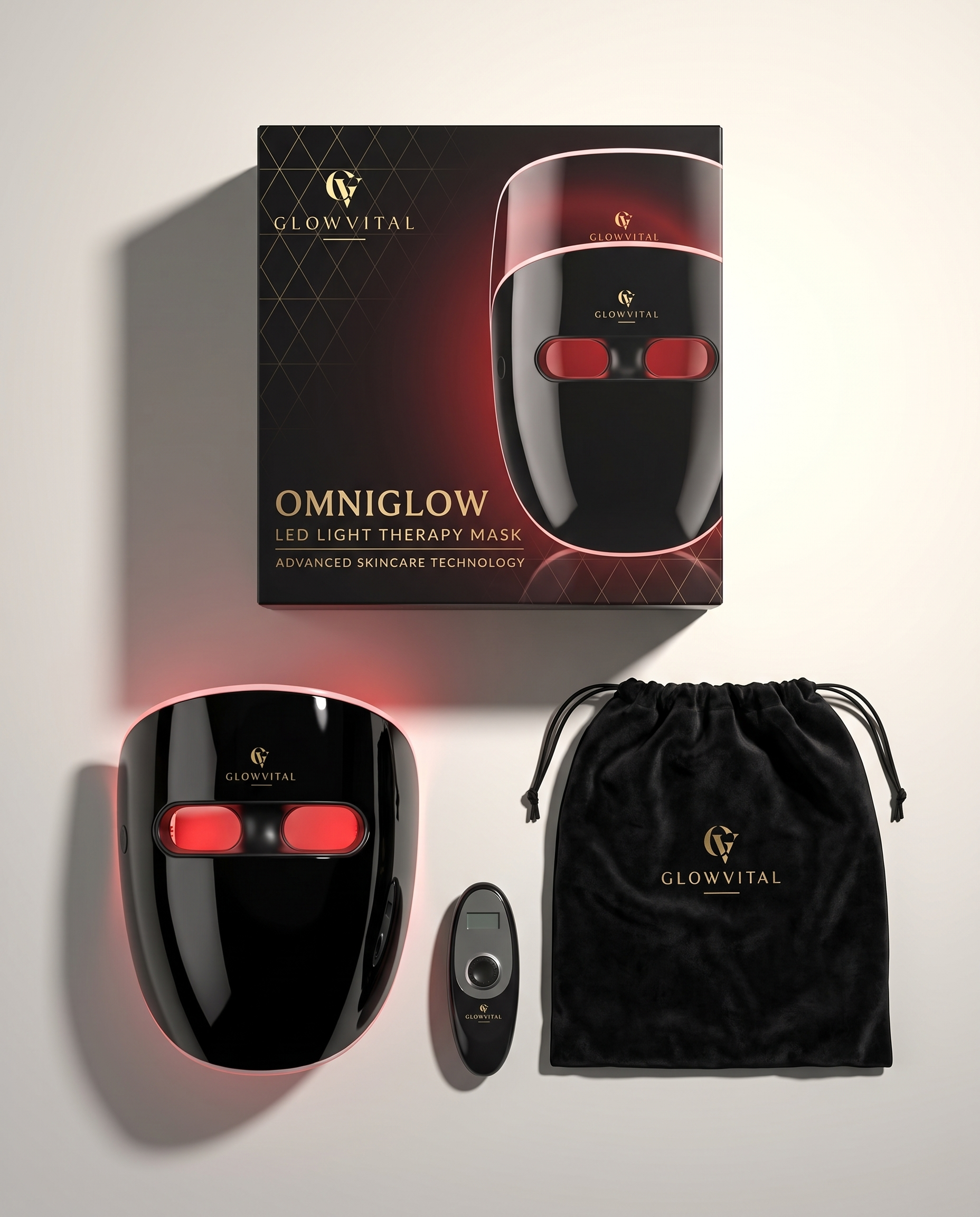
The OmniGlow is the third kind. The battery, the LEDs and the electronics are all in the mask, and the remote is a separate object that is not attached to it by anything. There is no lead, no belt clip and no controller to keep in a pocket, which means a session is ten minutes you can spend anywhere in the house rather than ten minutes you have to sit down for.
It carries the same three wavelengths as the masks it competes with, red at 620 to 640nm, blue at 465 to 475nm and near infrared at 820 to 850nm, across 120 medical grade LEDs. The full spec by spec comparisons are here: against the Shark CryoGlow and against the CurrentBody Series 2.
How we compared. Specifications were checked in August 2026 against each brand's own published materials, user guides and independent long term reviews. We sell the OmniGlow, so read our conclusions knowing that, and confirm the current specification on each brand's own site before you buy. Hardware changes between model years, and a cable that exists today may not exist in the next revision. Every advantage we know of for the other masks is stated in this article, because a comparison you cannot trust is worth nothing.
Nothing attached to you
Battery and controls in the mask, a separate remote with no lead between them. Ten minutes a session, anywhere in the house. Rated 4.6 from 751 reviews.
Shop OmniGlow · £199.992 Year Warranty · 60 day money back guarantee · Free UK delivery over £29.99
Frequently asked questions
Are LED face masks wireless?
Most are battery powered rather than mains powered, which is what brands mean by wireless. That is not the same as having no cable. Many well known masks still run a lead from the mask to a separate controller that holds the battery and the buttons, which you clip to your clothing. A genuinely untethered mask keeps the battery and electronics in the mask itself so nothing is attached to you.
Does the Shark CryoGlow have a cable?
Yes. The CryoGlow is not mains powered, but its remote control is connected to the mask by a lead of roughly 35 inches, about 90cm. The remote holds the rechargeable battery and has a belt clip so you can attach it to your clothing during a session. Shark's own materials describe this design, and long term reviewers commonly raise the lead as the main drawback.
Does the CurrentBody Series 2 mask have a controller cable?
Yes. The Series 2 uses a clip on controller that connects to the mask and holds the rechargeable battery, so the controller is attached to you rather than sitting loose. You charge the controller rather than the mask.
Which LED face mask has no cable at all?
The GlowVital OmniGlow keeps its battery, LEDs and electronics inside the mask, and its remote is not connected to the mask by any lead. As of August 2026 that makes it the untethered option among the widely sold UK masks compared here. Specifications change between model years, so confirm on each brand's current listing.
Does having no cable affect how well the mask works?
No. The light output is determined by the wavelengths, the number of LEDs and how evenly they sit against the face, not by where the battery lives. What the cable affects is whether you keep using the device, and with light therapy consistency over eight to twelve weeks is what the results depend on.
Is a mask with the battery in it heavier to wear?
It carries slightly more weight on the face, which is the genuine engineering argument for a tethered controller. In practice the difference on a well designed mask is small over a ten minute session, and most people find it easier to tolerate than a lead they have to dress around.