Cart
0
Written by the GlowVital team · Last reviewed 13 August 2026
The short answer
Red light therapy uses a narrow band of visible light, around 620 to 640nm, to support how skin looks over time. It is best understood as a slow, cumulative habit rather than a treatment. Expect a brighter, less tired look within a few weeks, and changes in the appearance of firmness and fine lines across roughly eight to twelve weeks of consistent use. It does nothing overnight, and it is not a replacement for sun protection.
Red light therapy has gone from clinic to bathroom shelf in about five years, and the claims have inflated on the way. Some of what you read is grounded in decades of research. Some of it is a supplement brand borrowing the vocabulary. This guide separates the two, plainly, and tells you what to expect if you start using it at home.
What red light therapy actually is
Red light therapy delivers narrow bands of visible light onto the skin at safe, non UV wavelengths. There is no heat to speak of, no abrasion and nothing removed. Light is simply absorbed, and the skin responds to it.

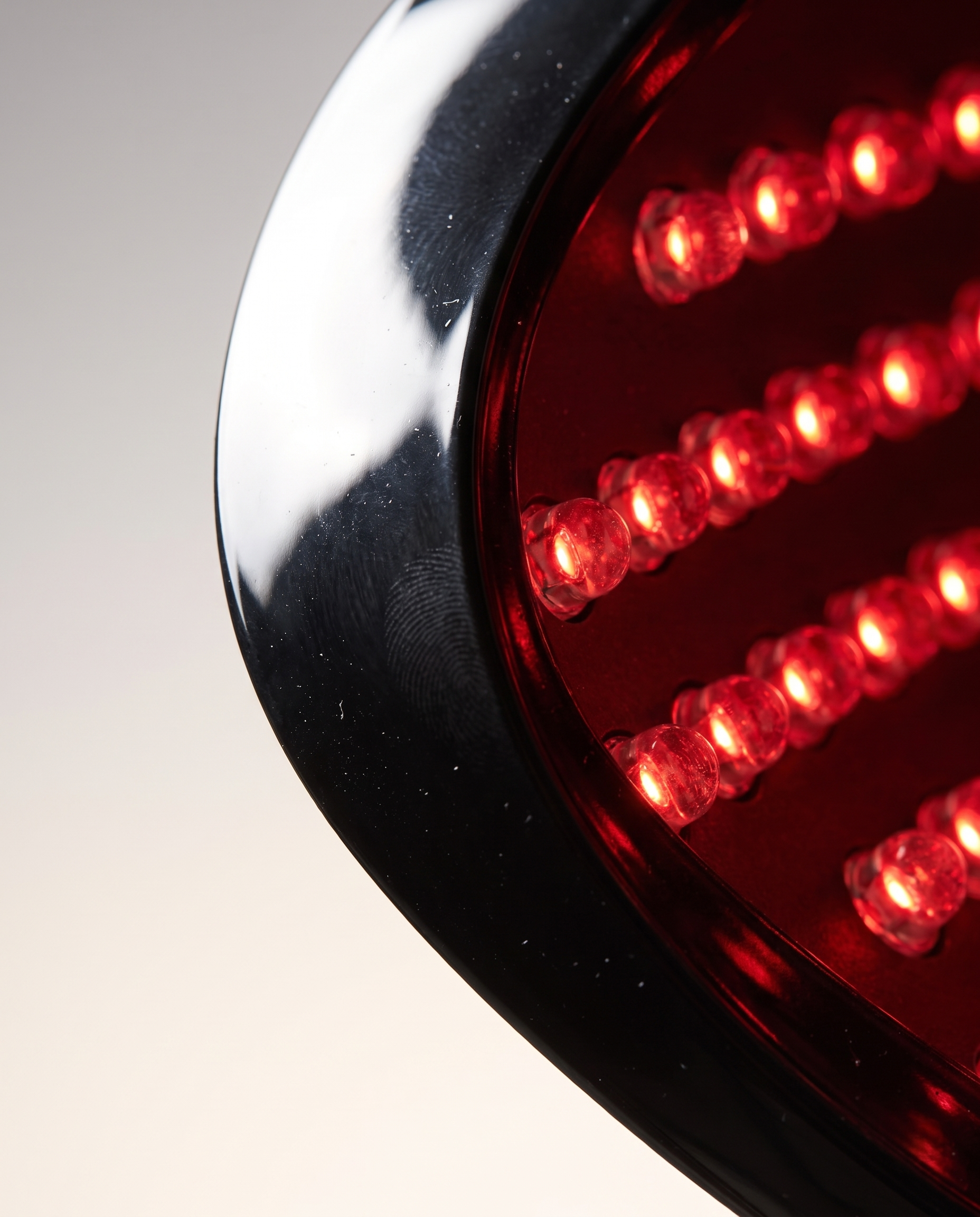
Red light at 620 to 640nm. Visible, absorbed at and near the surface, and the most studied band for how skin looks.
The underlying idea is straightforward. Cells contain structures that absorb light in specific bands, and absorbing that light appears to nudge normal cell activity along. It is the same principle behind why light matters to almost every living system, applied narrowly and at a controlled dose. What it is not is a laser, a peel or anything that injures the skin to force a repair response.
That distinction is the reason red light suits people who cannot tolerate strong actives. Nothing is being stripped, so there is no downtime to plan around.
Why the wavelength number matters
If you only take one thing from this page, make it this: the number in nanometres tells you far more than the brand name does.
Light behaves differently at different wavelengths. A shorter wavelength scatters at the surface. A longer one travels further before it is absorbed. So a device advertising red light at 630nm and a device advertising red light at 630nm are, on that measure, doing the same thing, whoever made them. The interesting questions are how many LEDs are delivering it, how evenly they sit against your face, and how long you will keep using it.
The three bands that appear in serious home devices are these.
- Red, around 620 to 640nm. The most studied band for the look of skin. Associated with supporting the appearance of firmness and smoothness over time.
- Blue, around 465 to 475nm. Targets blemish causing bacteria on the surface of the skin, which is why it is the band linked with clearer looking skin. Covered properly in our guide to blue light at home.
- Near infrared, around 820 to 850nm. Invisible, and the deepest travelling of the three. Included in premium devices for broader skin support.

The same device, a different band. Blue sits at 465 to 475nm. Near infrared, at 820 to 850nm, is invisible entirely.
A mask carrying only red is not useless. A mask carrying all three simply gives you more than one route, and you are not left buying a second device later.
What red light genuinely supports
Here is the honest version, using the language the evidence actually supports.
- The look of firmness. The most commonly reported change, and the slowest to arrive. Think months, not days.
- The appearance of fine lines. Softening rather than erasing. Expect subtlety.
- A brighter, more even looking tone. Usually the first thing people notice, and often the thing that keeps them using it.
- A less tired look. Hard to measure and easy to dismiss, but it is the change most people mention first, and it tends to show up early.
Notice the framing. Red light supports how skin looks. That is not brand caution for its own sake, it is an accurate description of what a light based cosmetic device does.
What it does not do
Being clear about the ceiling is more useful than another paragraph of benefits.
- It is not a substitute for SPF. Daily sun protection remains the single most effective thing you can do for how your skin ages. Red light does not replace it and never will.
- It does not deliver overnight change. Anyone selling a one session transformation is selling you a photograph, not a result.
- It is not a medical treatment. A home cosmetic device supports the appearance of skin. It does not treat diagnosed conditions, and if you have one, your GP or dermatologist is the right first call.
- It will not out perform consistency. Three sessions a week for three months beats a fortnight of daily enthusiasm followed by a drawer. Every time.
Red light and near infrared are not the same
These two get used interchangeably in marketing copy, and they should not be.
Red light, at roughly 620 to 640nm, is visible. You can see it, it looks red, and it is absorbed at and near the surface. That surface level absorption is exactly why it is the band most associated with tone and the look of texture.
Near infrared, at roughly 820 to 850nm, is invisible. Switch on a near infrared mode and it can look as though nothing is happening, which unsettles people the first time. Longer wavelengths scatter less and travel further before being absorbed, which is why devices include it alongside red rather than instead of it.
The practical upshot: if a device offers both, using both is the point. You are covering two depths rather than paying for one and hoping.
How to fit it into a real routine
The mechanics are simple, and getting them right removes most of the reasons people quit.
- Cleanse and dry the skin first. Light does not travel usefully through makeup, SPF or a heavy occlusive layer. Bare skin, every time.
- Nothing on the face during the session. Serums can wait ten minutes and will not be wasted.
- Ten minutes is the session. Longer is not better. Cells respond within a range, and pushing past it does not push the response further.
- Three to five times a week. Enough to accumulate, achievable enough to sustain. There is a fuller breakdown in how often you should use an LED face mask.
- Apply your routine afterwards. Skin is clean, warm and receptive, which makes it a sensible moment for your serum and moisturiser.
 Ten minutes, three to five evenings a week. The mask you will actually keep using is the one that fits round your evening.
Pick a slot you already occupy. The people who stick with light therapy are the ones who attached it to something existing, such as the ten minutes before bed or while a programme is on, rather than treating it as a separate appointment with themselves.
What the timeline honestly looks like
| When | What most people notice |
|---|---|
| Week 1 | Very little visible. Skin often feels calmer straight after a session. |
| Weeks 2 to 3 | A brighter, less tired look. Usually the first change other people comment on. |
| Weeks 4 to 6 | Tone looks more even. Makeup tends to sit better. |
| Weeks 8 to 12 | The look of firmness and the appearance of fine lines soften. Subtle, cumulative, and the reason the habit is worth keeping. |

What people reported after seven weeks of consistent use, from a 42 subject consumer perception study. Individual results vary.
We have set this out in more detail, side by side with what people actually photograph, in our realistic 12 week before and after guide.
A note on expectations. Light therapy is cumulative and gradual by nature. If a before and after image shows a dramatic change in a fortnight, something other than the light is doing the work, usually lighting, angle or makeup. Judge any device on week ten, not week one.
What to look for in a device
Five questions separate a mask you will use from one you will not.
- Which wavelengths does it carry? Red alone is common. Red, blue and near infrared together gives you the full range without a second purchase.
- Is it wireless? A cable is the most underrated reason masks go unused. If you have to sit near a socket, you will skip sessions.
- Does it cover the whole face? Partial coverage means uneven exposure, and the areas people most want to address tend to sit at the edges.
- How does it feel to wear? A rigid shell that presses in one place is a mask you will resent by week three.
- What happens if it does not suit you? A genuine money back window is a brand telling you it expects the device to earn its place.
If you are weighing specific models, our UK buying guide compares the main options, and we have detailed head to heads against CurrentBody and Shark CryoGlow.
Where the OmniGlow sits
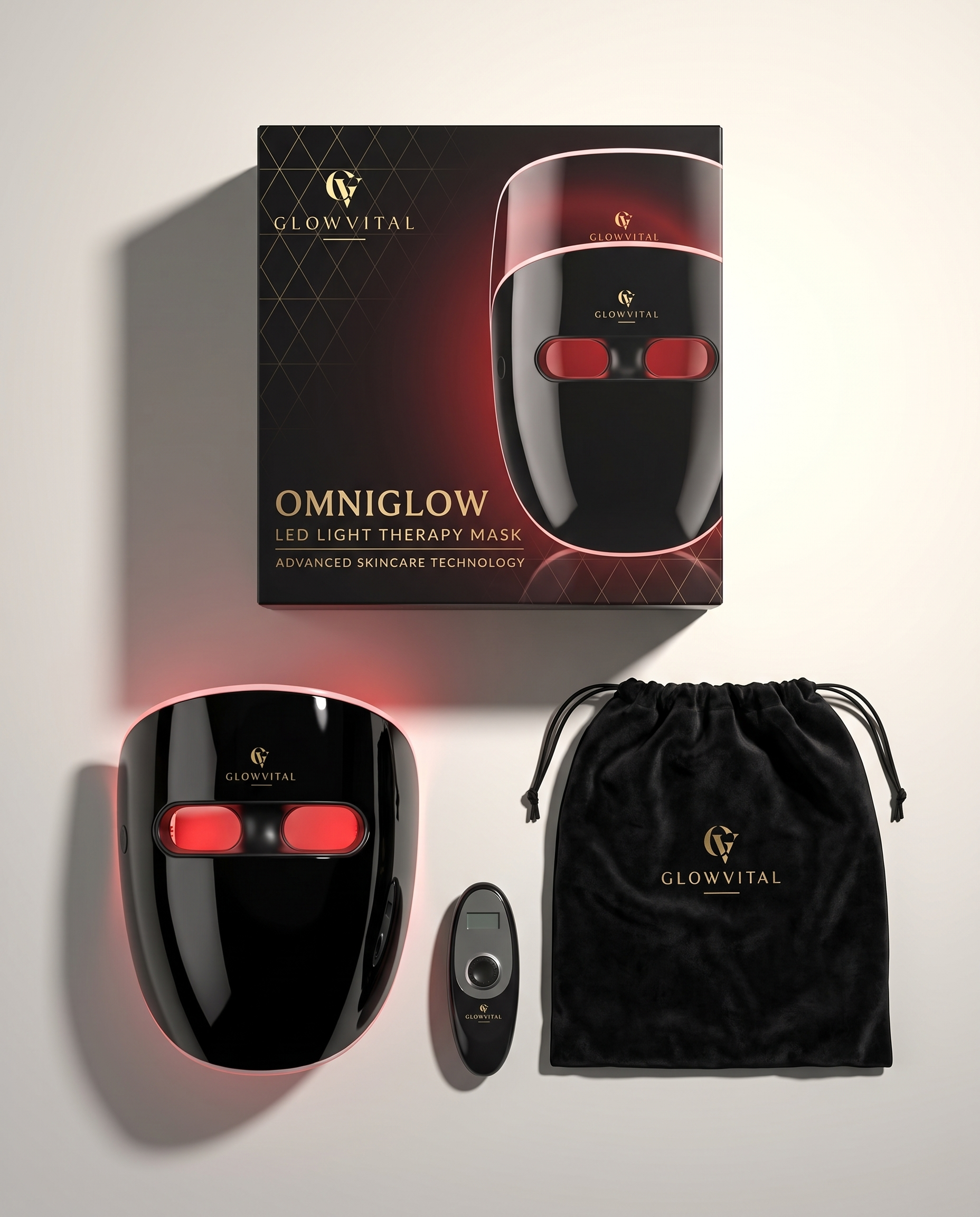
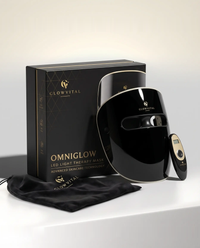
All three clinically recognised wavelengths, red at 620 to 640nm, blue at 465 to 475nm and near infrared at 820 to 850nm, in a fully wireless mask. Ten minutes a session. Rated 4.6 from 751 reviews.
Shop OmniGlow · £199.992 Year Warranty · 60 day money back guarantee · Free UK delivery over £29.99
Frequently asked questions
Is red light therapy the same as infrared?
No, though they are related and often used together. Red light sits at the visible end, roughly 620 to 640nm, and works at the surface and just below it. Near infrared, roughly 820 to 850nm, is invisible to the eye and travels deeper. Devices that carry both give you two depths rather than one, which is why premium masks tend to include them side by side.
Does red light therapy work through makeup or SPF?
Not well. Anything sitting on the skin scatters and absorbs light before it reaches you, and mineral SPF in particular is designed to do exactly that. Cleanse first, go on with bare dry skin, then apply your serums and moisturiser afterwards.
How long does red light therapy take to show anything?
Most people notice a brighter, less tired look within the first two or three weeks. Changes in the look of firmness and fine lines build more slowly, usually across eight to twelve weeks of consistent use. Nothing about red light is instant, and any brand promising otherwise is overselling it.
Can you overdo red light therapy?
More is not better. Cells respond to light within a range, and going far beyond the recommended session length does not push the response further. Ten minutes a session, three to five times a week, is the sensible band for a home mask. Follow the instructions that came with your device rather than doubling up.
Is red light therapy safe for sensitive skin?
Red light is non invasive and uses no UV, so it is generally well tolerated, including by people who find actives harsh. If you have a diagnosed skin condition, are on photosensitising medication, or are pregnant, speak to your GP or dermatologist before starting.
Do cheap red light masks work as well as expensive ones?
It depends entirely on what is inside. A 630nm LED behaves the same way whichever brand ships it, so the badge on the box is not what matters. What matters is which wavelengths are included, how many LEDs there are, how evenly they sit against the face, and whether you will actually wear it. A cheap mask that covers only part of your face, or that tethers you to a plug socket, tends to end up in a drawer.