Cart
0
Written by the GlowVital team · Last reviewed 17 August 2026
The short answer
Omnilux is the name dermatologists reach for, and its two wavelengths, 633nm red and 830nm near infrared, are the most studied pairing in the category. At £290 it carries 132 LEDs, a two year device warranty and a controller on a lead. The £199.99 OmniGlow adds the blue band Omnilux leaves out entirely, has no cable between mask and remote, and gives you 60 days to return it. Omnilux does not offer a money back guarantee. If clinical pedigree decides it, buy the Omnilux. If you want blemish coverage and a way out if it does not suit you, the OmniGlow is the better buy.
Omnilux is the LED brand your facialist probably owns. It came out of professional clinical devices rather than consumer beauty, it is the one most often described as dermatologist recommended, and unlike a lot of this category that reputation is earned rather than bought. So this comparison is not going to pretend otherwise. It is going to tell you exactly where the £90 difference goes, and where it does not.
Choose the Contour Face if…
Clinical heritage is what reassures you, red and near infrared cover everything you care about, and you have no interest in blue light for blemishes.
Choose the OmniGlow if…
You want all three wavelengths rather than two, nothing tethered to your clothing, and a genuine 60 day money back window to test it on your own skin.
First, what Omnilux genuinely gets right
Three things, and they are not small.
- The wavelength pairing is the most researched in the category. 633nm red and 830nm near infrared is the combination that appears most often in the published literature on light and skin appearance. Omnilux did not pick those numbers from a catalogue.
- The professional lineage is real. Omnilux built clinic devices before it built consumer ones, and practitioners who use the professional units recommend the home ones because they recognise the brand from work.
- 132 LEDs across 66 bulbs. More diodes than most masks in this bracket, ours included, and diode count does matter for how evenly the light lands.
If you buy the Contour Face you are not being taken advantage of. That is more than can be said for parts of this market.

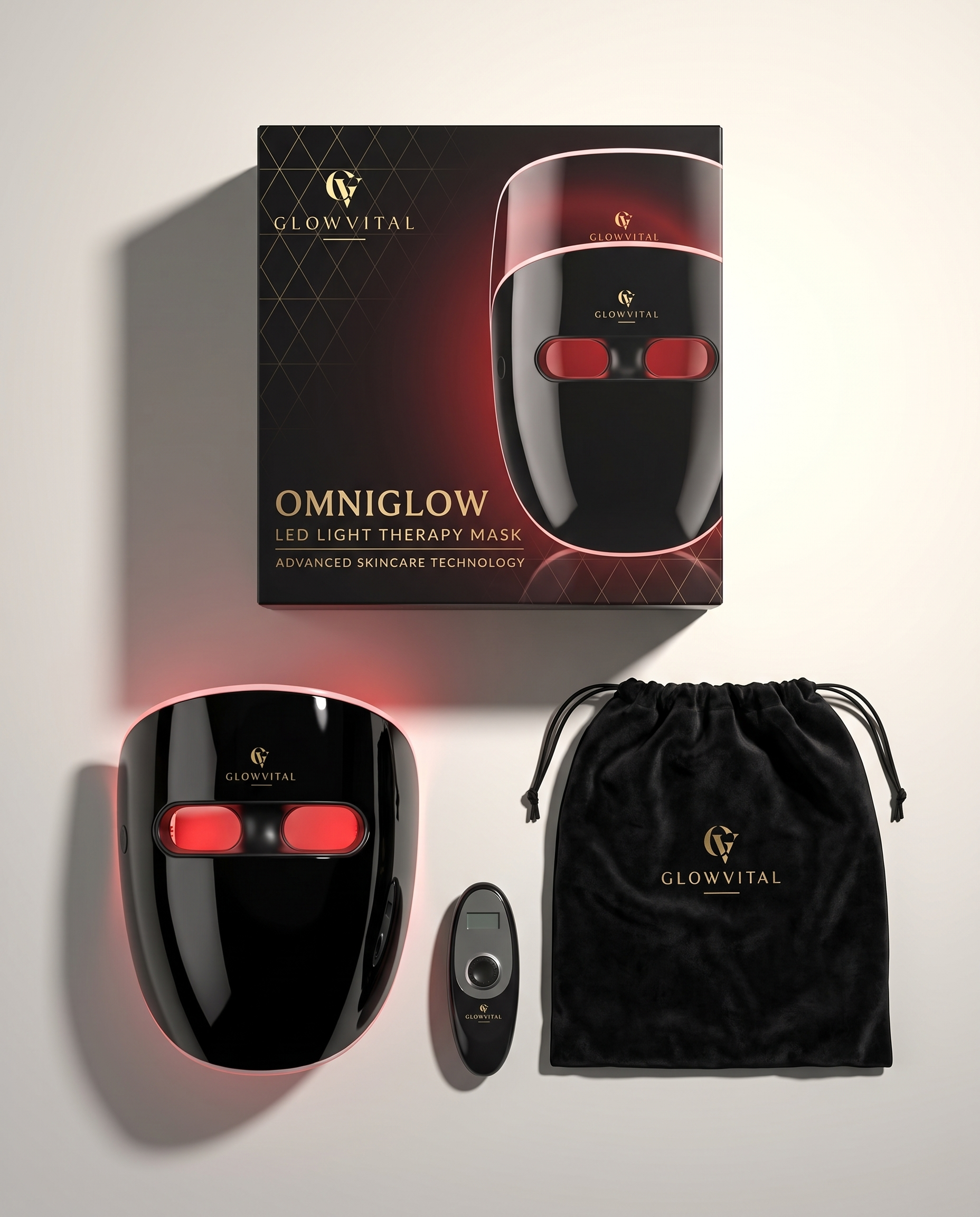
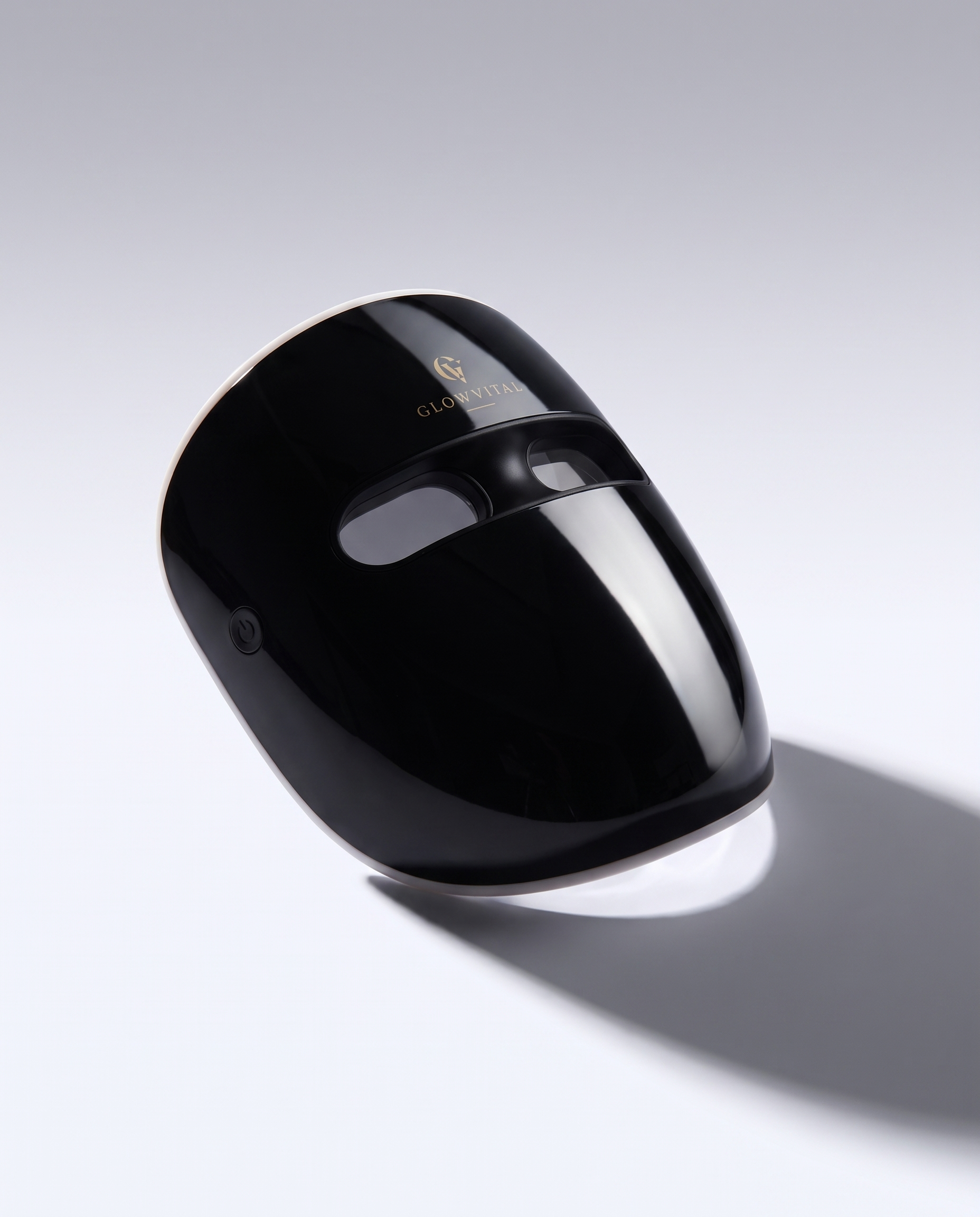
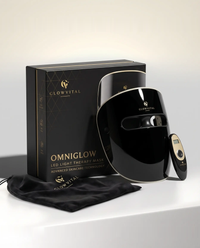
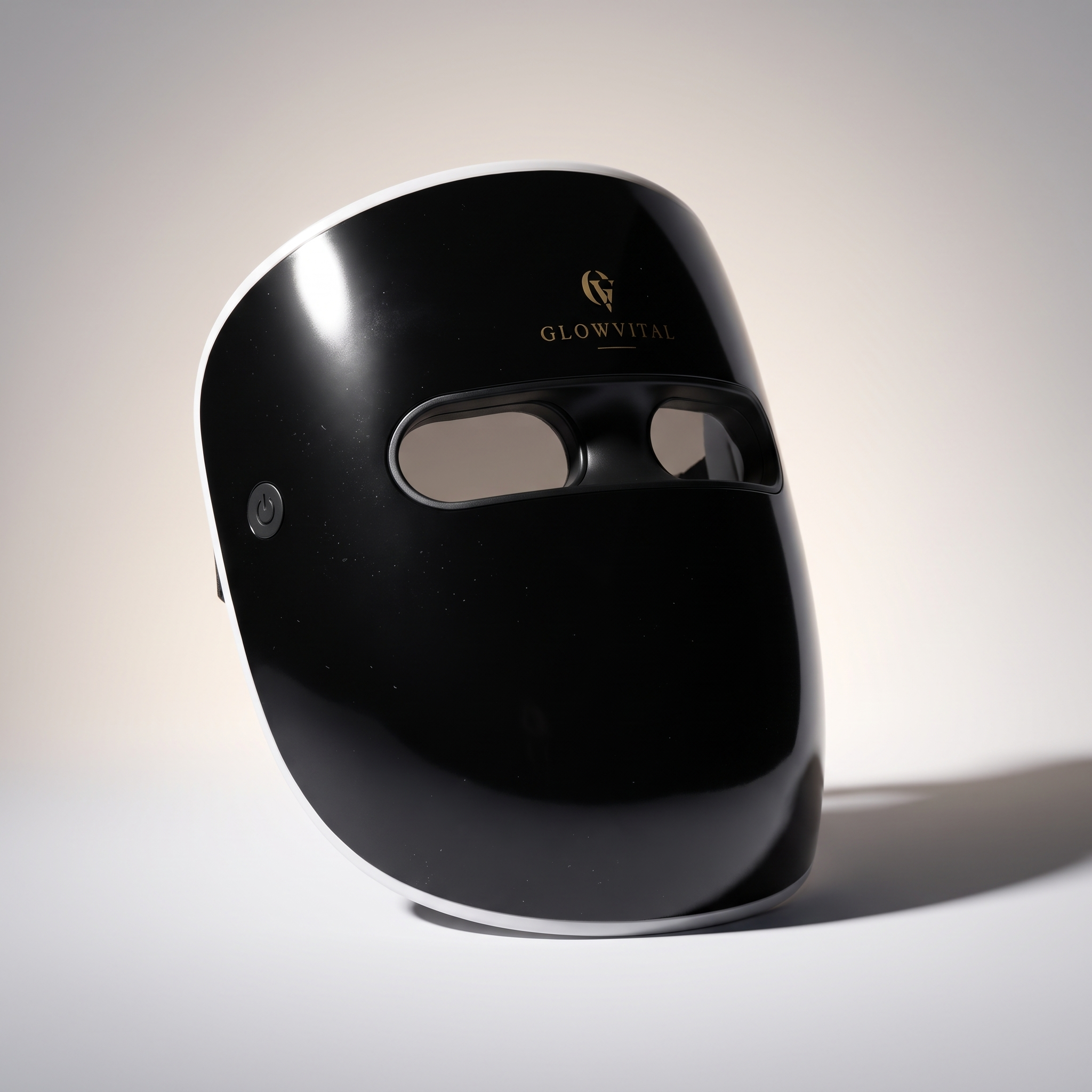
The OmniGlow. A soft silicone shell rather than a rigid visor, with the electronics inside it.
The full specification table
Checked August 2026 against each brand's own published materials.
| GlowVital OmniGlow | Omnilux Contour Face | |
|---|---|---|
| UK price at time of writing | £199.99 | £290 |
| Red light | ✓ 620 to 640nm | ✓ 633nm |
| Near infrared | ✓ 820 to 850nm | ✓ 830nm |
| Blue light for blemishes | ✓ 465 to 475nm | Not included |
| LED count | 120 medical grade | 132 across 66 bulbs |
| Power source | Battery in the mask | Battery in the controller |
| Cable between mask and controller | None | Yes, controller on a lead |
| Session length | 10 minutes | 10 minutes |
| Warranty | 2 years, whole device | 2 years device, 1 year controller |
| Money back guarantee | 60 days | Not offered |
Note the LED row. Omnilux wins it, and we have marked it as theirs. A comparison that had us winning every line would not be worth your time.
The blue light gap

Blue sits at 465 to 475nm and targets blemish causing bacteria at the surface. The Contour Face does not carry it.
This is the specification difference most buyers miss, and it is the same gap the CurrentBody flagship has. The Contour Face is a two wavelength device. Red and near infrared are aimed at the look of firmness, tone and fine lines. Neither is the band associated with clearer looking skin.
If breakouts are not part of your concern, this costs you nothing and you can ignore it entirely. If they are, a two wavelength mask does not cover it, and you are either buying a second device or accepting that half of what you wanted is not addressed. Our guide to blue light at home explains what that band does and does not do.
The controller cable
Both masks are battery powered, so both get sold as cordless. They are not the same thing. The Contour Face keeps its battery in an oval controller that the mask connects to by a lead. The OmniGlow keeps battery and electronics inside the mask, and its remote is untethered, so nothing is clipped to you.

One object rather than two. There is no lead leaving the shell, and nothing to clip to a waistband.
Whether that matters depends entirely on how you use it. If you sit still for ten minutes anyway, a lead is a non issue. If your ten minutes happens while you move around the house, it is the difference between a habit and a drawer. We went through the whole category on this in which LED masks really have no cable.
The guarantee difference, which is the big one
If you only compare one row, make it this one.
LED results build over eight to twelve weeks. That is not a marketing line, it is the honest timeline, and we have set it out in detail in our 12 week before and after guide. Which means the only way to know whether a mask works on your skin is to use it for longer than two months.
Omnilux does not offer a money back guarantee, and returns are refused once the hygiene seal is broken. In practice that means the decision is final at the moment you open the box, before you have had a single session. You are asked to spend £290 on the strength of the brand's reputation rather than on your own results.
The OmniGlow ships with 60 days from delivery. Open it, use it five nights a week for two months, photograph your own face, and if it has not earned its place send it back. That difference is worth more than any specification row above it, because it is the one that moves the risk off you and onto the product.
How we compared. Specifications and prices were checked in August 2026 from each brand's own published materials, including Omnilux's own product listing and quick start guide. We sell the OmniGlow, so read our conclusions knowing that, and confirm Omnilux's current price, specification and returns terms on their own site before you buy, because all three change. Every Contour Face advantage we know of is stated in this article, including the one where it beats us on diode count.
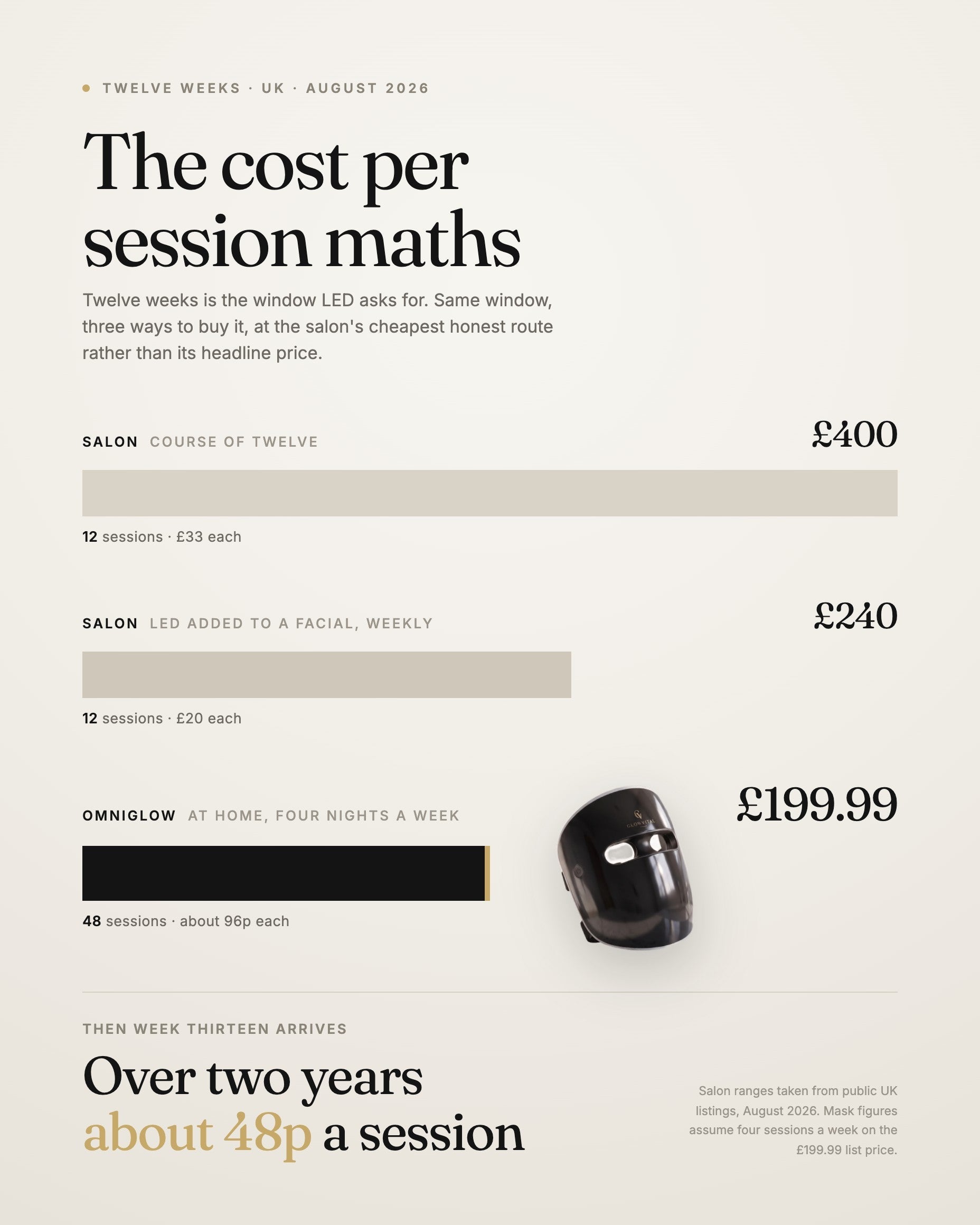
Cost per session
Assume four sessions a week, which is 208 sessions in year one.
| Option | Upfront | Cost per session, year one |
|---|---|---|
| GlowVital OmniGlow | £199.99 | About 96p |
| Omnilux Contour Face | £290 | About £1.39 |
About 45p a session between them, or roughly £90 over the first year. What that £90 buys you is a more established clinical name and 12 more diodes. What it costs you is the blue band and the ability to change your mind.
Who should buy which
Buy the Omnilux Contour Face if your facialist recommended it, red and near infrared are all you want, and brand pedigree is the thing that makes you comfortable spending on a device at all. It is a good mask made by people who understand light.
Buy the OmniGlow if you want three wavelengths rather than two, you would rather not wear a controller, and you want the option to return it after you have actually tested it. At £199.99 it also leaves you £90, which happens to be roughly a year of Lumeris under eye patches.
Three wavelengths, no cable, 60 days to decide
Red at 620 to 640nm, blue at 465 to 475nm and near infrared at 820 to 850nm, across 120 medical grade LEDs in a fully untethered mask. Rated 4.6 from 751 reviews.
Shop OmniGlow · £199.992 Year Warranty · 60 day money back guarantee · Free UK delivery over £29.99
Frequently asked questions
Does the Omnilux Contour Face have blue light?
No. The Contour Face is a two wavelength device using 633nm red and 830nm near infrared. Blue light, the band associated with clearer looking skin, is not included. The OmniGlow carries blue at 465 to 475nm as one of its three standard modes.
Does the Omnilux Contour Face have a cable?
It is battery powered rather than mains powered, but the battery sits in a separate oval controller that the mask connects to by a lead. The OmniGlow keeps its battery and electronics inside the mask and its remote is untethered, so there is no cable between the two.
Does Omnilux offer a money back guarantee?
No. Omnilux does not offer a money back guarantee, and returns are not accepted once the hygiene seal has been broken. The OmniGlow includes a 60 day money back guarantee from delivery, which matters because LED results build over eight to twelve weeks.
How much is the Omnilux Contour Face in the UK?
£290 on Omnilux's own UK listing as checked in August 2026, against £199.99 for the GlowVital OmniGlow. Prices change, so confirm on their site before buying.
Which has more LEDs?
The Contour Face, with 132 LEDs across 66 bulbs, against 120 medical grade LEDs in the OmniGlow. Diode count affects how evenly light lands across the face, so this is a genuine point in Omnilux's favour.
Is Omnilux better because dermatologists recommend it?
The recommendation is real and reflects genuine clinical heritage. What it does not change is the physics: a 633nm red LED behaves the same way whichever brand ships it. Pedigree is a good reason to trust a device's build and support. It is not evidence that the same wavelength does more in one shell than another.